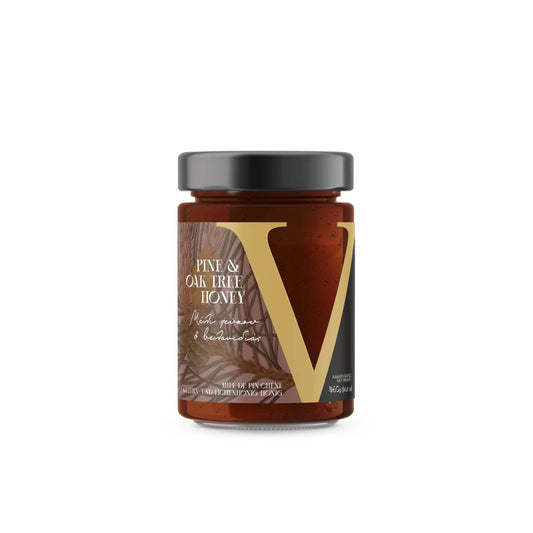

Chestnut honey is not for those seeking a mild, sweet flavor. This dark, robust honey variety has a distinctive character and is especially appreciated by lovers of more intense flavors. In this article, you will discover what chestnut honey is, how it tastes, where it comes from, and how best to use it.
What is Chestnut Honey?
Chestnut honey is made by bees that collect nectar from the blossoms of the chestnut tree. These blossoms appear in early summer and, unlike many other tree species, produce a relatively large amount of nectar, resulting in a distinct, recognizable type of honey.
What is the Difference Between Sweet and Horse Chestnut?
For making chestnut honey, it specifically concerns the sweet chestnut tree (Castanea sativa), also known as the edible chestnut tree, with the familiar, edible chestnuts that you can gather from the ground in autumn. This is a different tree than the wild chestnut or horse chestnut (Aesculus hippocastanum), which you often see along Dutch avenues and whose fruits are not edible. So, when you see "chestnut honey" or "sweet chestnut honey" on a label, it always refers to honey from the edible, sweet chestnut tree.
How Does Chestnut Honey Taste?
Chestnut honey has a robust, complex flavor: earthy and nutty, with a subtle bitterness and notes of caramel. This makes chestnut honey significantly less sweet than, for example, acacia honey or wildflower honey. The color varies from amber brown to deep dark brown. Because its flavor is so pronounced, chestnut honey is particularly appreciated by honey lovers looking for something different from the usual, sweeter honey varieties.
Properties of Chestnut Honey
A striking characteristic of chestnut honey is that, like acacia honey, it crystallizes relatively slowly, thus retaining its liquid, silky texture for a long time. This makes it easy to dispense and pour, for example, over cereals or yogurt. Should the honey crystallize over time, place the jar in warm water (not boiling) and stir gently until the honey becomes liquid again.
Where Does Chestnut Honey Come From?
The chestnut tree is widespread in Europe, with well-known production areas in Italy and Spain. In Italy, chestnut honey is even one of the most popular types of honey. In countries like Turkey and the Balkans, the sweet chestnut tree also grows wild, although honey from there is less commonly found on the Dutch market. At Honingwinkel.nl, we collaborate with beekeepers from Italy and Spain for our chestnut honey.
What is Chestnut Honey Good For?
Chestnut honey is primarily a flavorful, natural sweetener with a distinct character. Like all honey varieties, it naturally contains some minerals, but it is predominantly composed of sugars. There is no claim recognized by the European Union for specific health effects. Therefore, use chestnut honey primarily because you enjoy its taste, not as a substitute for a balanced diet or medical advice.
What is the Healthiest Honey?
No single type of honey has been officially recognized as "the healthiest." Whether it's chestnut, acacia, thyme, or wildflower honey: all honey varieties predominantly consist of natural sugars, with small, varying amounts of minerals and other substances. The differences between honey varieties are mainly in taste, texture, color, and origin. Therefore, choose primarily based on what you like.
How Do You Use Chestnut Honey?
Thanks to its robust, slightly bitter taste, chestnut honey is versatile in the kitchen:
- On a cheese board, where the bitterness beautifully contrasts with creamy or spicy cheeses.
- On whole-wheat bread, possibly with nuts.
- Stirred into lukewarm tea or coffee — keep the temperature below 40°C to preserve the natural structure of the honey.
- In marinades and dressings, for a deeper, earthy flavor.
- Pure from the spoon, for those who want to experience the intense flavor unmixed.
Where to Buy Chestnut Honey?
At Honingwinkel.nl, you will find chestnut honey from both Italy and Spain, as well as organic chestnut honey. Every jar is 100% pure and unprocessed, directly from the beekeeper. Curious about other distinct honey varieties? Also check out our thyme honey, or the milder acacia honey if you prefer a softer taste.
Frequently Asked Questions
What is chestnut honey good for? Primarily as a flavorful, natural sweetener with a distinct character. There is no recognized claim for specific health effects; chestnut honey is a food product, not a medicine.
How does chestnut honey taste? Robust and earthy, with nutty notes, a subtle bitterness, and hints of caramel. Significantly less sweet than, for example, acacia or wildflower honey.
What is the healthiest honey? No single honey variety has been officially recognized as "the healthiest." All honey consists predominantly of natural sugars; the differences lie in taste, texture, and origin.
What is sweet chestnut honey? Honey made from the nectar of the sweet, edible chestnut tree (Castanea sativa) — not to be confused with the wild horse chestnut, whose fruits are not edible.
Curious about our chestnut honey? View the full assortment at Honingwinkel.nl.