
Propolis: What Is It and What Are the Benefits?
Propolis is one of the most talked-about bee products, and for good reason: it is widely touted online as a natural miracle cure. But what exactly is propolis, and what truly holds up when you compare it to the facts? In this article, we explain what propolis is, how it is made, what research has been done on its effects, and how to use it.
What is Propolis?
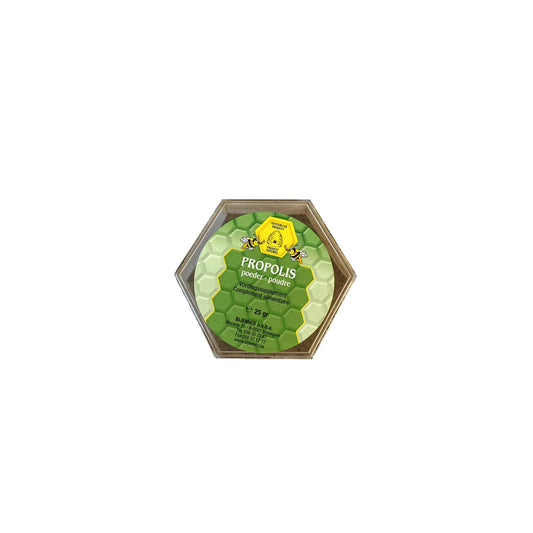
Propolis is made by bees from the buds of poplars and other cone-bearing trees, supplemented with resins and plant sap from their surroundings. The composition and color of propolis vary by region, season, and bee colony: from dark brown (most common) to red, black, white, or green. The resinous appearance of propolis may not immediately invite consumption, but many people swear by the product — it is applied to the skin as well as taken orally.
How Do Bees Make Propolis?
Bees primarily use propolis to seal their hive: gaps and cracks are filled with it, and walls are lined. Thanks to this natural sealant, bacteria, fungi, and viruses have more difficulty entering the beehive, and the bees are better protected against external influences, such as the weather. For human use, propolis is harvested separately using a special grid in the beehive, after which it is processed into drops, ointment, spray, capsules, and more.
The Benefits of Propolis: What Does Research Say?
This is the question about which most confusion exists, and about which we want to be consciously honest. Propolis is regularly tested in laboratory research for antibacterial, antifungal, and antiviral properties, and such studies do indeed show effects in controlled, external conditions (in a petri dish). However, that is different from a proven effect when consumed by humans.
The European Food Safety Authority (EFSA) has evaluated several health claims submitted by manufacturers about propolis and concluded that no causal link could be established between the use of propolis and the proposed health effects. Therefore, there is no EU-approved health claim for propolis. What is true: propolis has been a traditionally used bee product for centuries, with a scientifically established presence of substances such as flavonoids and resins. That is different from a confirmed effect on human health.
Drops vs. Spray vs. Capsules
Propolis is available in various forms, each with its own application:
- Drops, as a tincture (with alcohol) or alcohol-free variant (e.g., with olive oil), versatile for use: pure, mixed with food or drink, or externally on a specific area.
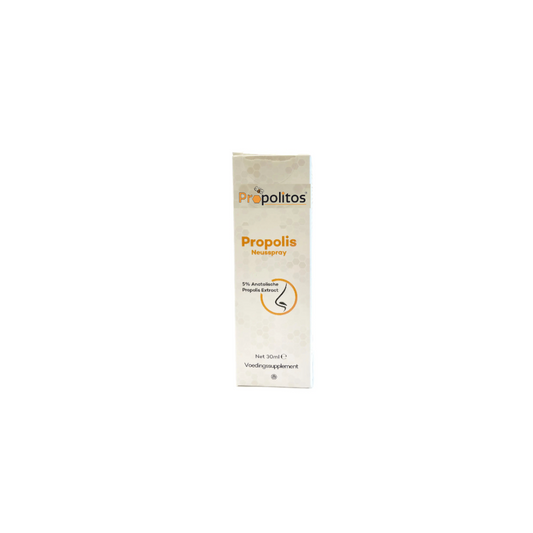
- Spray, such as a mouth spray or nasal spray, for targeted, local use with a fixed dosage per pump.
- Capsules, taste-neutral and easy to dose, ideal for daily use.
- Ointment, specifically intended for external use on the skin.
The choice is mainly a matter of preference: if you want something versatile and self-dosing, choose drops. If you are looking for convenience and a fixed dosage, then a spray or capsule is more practical. For external use on the skin, ointment is the most obvious choice.
How Do You Use Propolis?
Propolis is most often used internally by adults, in dosages that typically range between 400 and 500 mg per day when propolis is taken orally. You can also apply propolis externally to the skin, for example, with an ointment. Because the correct dosage and application depend on your personal situation and goal, our advice is to always discuss this with a doctor or pharmacist before using propolis structurally.
Points of Attention and Side Effects
Propolis is used by most people without problems, but in some cases, caution or avoidance is advisable:
- Allergy: if you are allergic to bee products, there is a chance that you will also have an allergic reaction to propolis. In that case, do not use it, or first carefully test a small amount.
- Pregnancy: insufficient scientific research has been done on the use of propolis during pregnancy. To be safe, we advise against using propolis during pregnancy, or only after consulting a doctor.
- Blood disorders and surgeries: propolis can affect blood clotting. If you have been diagnosed with a blood disorder, or are using blood thinners, consult your doctor first. Around surgery, it is recommended to stop using propolis approximately 2 weeks beforehand, in consultation with your treating physician.
- Children: propolis is not recommended for children younger than 1 year, just like most bee products.
Where Can I Buy Propolis?
At Honingwinkel.nl, we have an extensive range of propolis: from propolis ointment and propolis drops to propolis capsules and propolis spray. This makes us one of the largest webshops for propolis in the Netherlands.
Frequently Asked Questions
What is propolis? A sticky, resinous substance that bees make from the buds of poplars and other trees, used to seal and maintain their hive.
What are the benefits of propolis? The EFSA has concluded that there is no proven causal link between the use of propolis and the health claims submitted by manufacturers. There is no recognized health claim for consumption. However, propolis is a traditional, versatile bee product.
How much propolis should I use? Adults typically use propolis orally in dosages of 400 to 500 mg per day. Always discuss the appropriate dosage and application for you with a doctor or pharmacist.
When should you not use propolis? If you have an allergy to bee products, during pregnancy, with blood disorders, when using blood thinners, or around surgery. In these cases, always consult a doctor first.
What is the difference between propolis drops, spray, and capsules? Mainly the application: drops are versatile (ingestible or mixable), spray is aimed at local use in the mouth or nose, and capsules are taste-neutral and easy to dose.
Curious about our propolis assortment? View the full collection at Honingwinkel.nl.